Keeping cats indoors protects them from traffic, predators, and disease — and quietly removes almost everything a cat is built to do. Hunting, climbing, surveying territory, and choosing solitude are not optional extras for a cat; they are needs. The AAFP/ISFM guidelines on feline environmental needs organize those needs into five pillars, and Ohio State University’s Indoor Pet Initiative exists for the same reason: an indoor environment that meets them produces a healthier, calmer cat.
Enrichment is not about buying toys. It is about checking whether each pillar is actually present in your home.
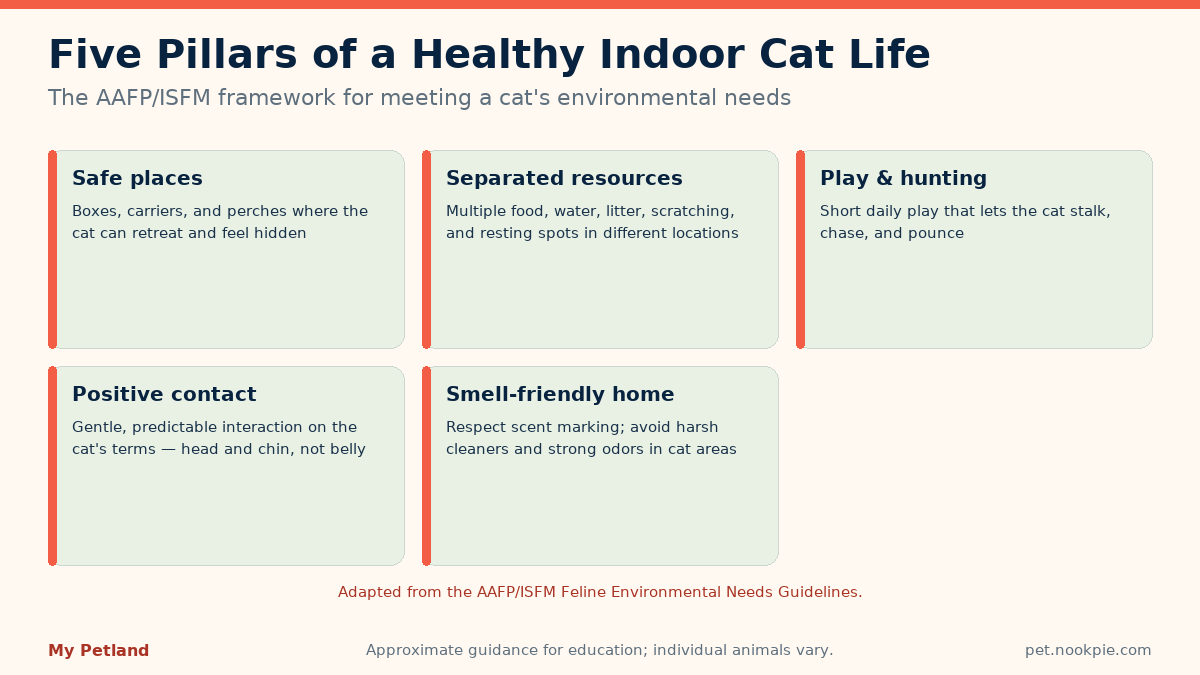
Pillar 1: Safe spaces
Every cat needs places to retreat where it cannot be followed — by other pets, children, or you. A safe space can be a high shelf, a covered bed, or a box; what makes it “safe” is that the cat is never disturbed there. Multi-cat homes need more than one, in different rooms, because a cat that shares all its hiding places does not have one.
Pillar 2: Multiple and separated key resources
Food, water, litter boxes, scratching areas, and resting spots should be spread out rather than clustered, and in multi-cat homes there should be more than one of each. The traditional rule of thumb for litter boxes is one per cat plus one — and location matters as much as count, since a box beside the food bowl serves neither need well. Separation lets a cat eat, drink, and eliminate without crossing another cat’s territory, which quietly lowers household tension even when the cats “get along.”
Pillar 3: Play and hunting behavior
Cats hunt in short, repeated bursts, and indoor cats need that cycle simulated. Two or three short interactive play sessions a day — a wand toy that moves like prey, ending with a “catch” — beat one long session. Food puzzles and foraging feeders turn part of the daily ration into work, which is closer to how a cat is designed to eat than a filled bowl. Rotate toys rather than leaving everything out; novelty is the ingredient that wears off.
Pillar 4: Positive, consistent human interaction
Cats prefer interaction on their own terms: predictable, gentle, and initiated by the cat as often as by the human. Regular, calm contact at familiar times suits most cats better than intense but irregular attention. Forcing handling or cuddling past the point a cat walks away teaches the cat that avoidance is the only lever it has — watching for the early “enough” signals and honoring them builds the trust that makes a cat seek you out.
Pillar 5: An environment that respects scent
A cat navigates its world largely by smell, depositing facial pheromones on furniture and doorways to mark the territory as familiar. Harsh cleaning of those scent-marked spots, strong air fresheners, and sudden new smells are quietly stressful. When rearranging or introducing new furniture, let the cat investigate on its own schedule, and keep some unwashed familiar bedding in place during transitions.
Life stage changes the recipe, not the pillars
Kittens need more play and more supervision — our kitten month-by-month guide covers the developmental windows. Adult cats settle into routine and benefit most from variety within it. Senior cats keep the same five needs but may reach them differently: ramps to favorite heights, low-entry resources, gentler play. And if a cat’s behavior changes noticeably — withdrawal, new hiding, litter-box avoidance — treat it as a health question first, not an enrichment failure; signs your pet needs a vet helps judge the response.
Common questions
My cat sleeps all day. Is it bored? Cats sleep many hours by nature, so sleep alone is not a sign of boredom. The useful test is what happens when the cat is awake: a cat that plays when offered, uses its scratchers, and moves between favorite spots is usually meeting its needs. One that paces, overgrooms, or startles into aggression may not be.
Do I need a cat tree, or are shelves and boxes enough? A tree is convenient, not mandatory. What cats need is vertical territory with a view and a safe surface — sturdy shelves, a cleared bookcase top, or a window perch can serve the same purpose, often more cheaply.
Can enrichment replace outdoor access? For most indoor cats, a well-designed environment meets their needs without the risks outside. The five pillars are the checklist — when all five are genuinely present, most indoor cats are content. A window view, safe scents, and daily play go a long way.