Under the AAHA and AAFP feline life-stage guidelines, a cat is considered senior from around ten years of age, and geriatric from fifteen. Unlike dogs, cats share a fairly uniform adult size, so the same boundaries apply across nearly all cats. The labels are care signals, not diagnoses: they mark when closer observation and more frequent veterinary conversations become worthwhile.
The feline boundaries at a glance
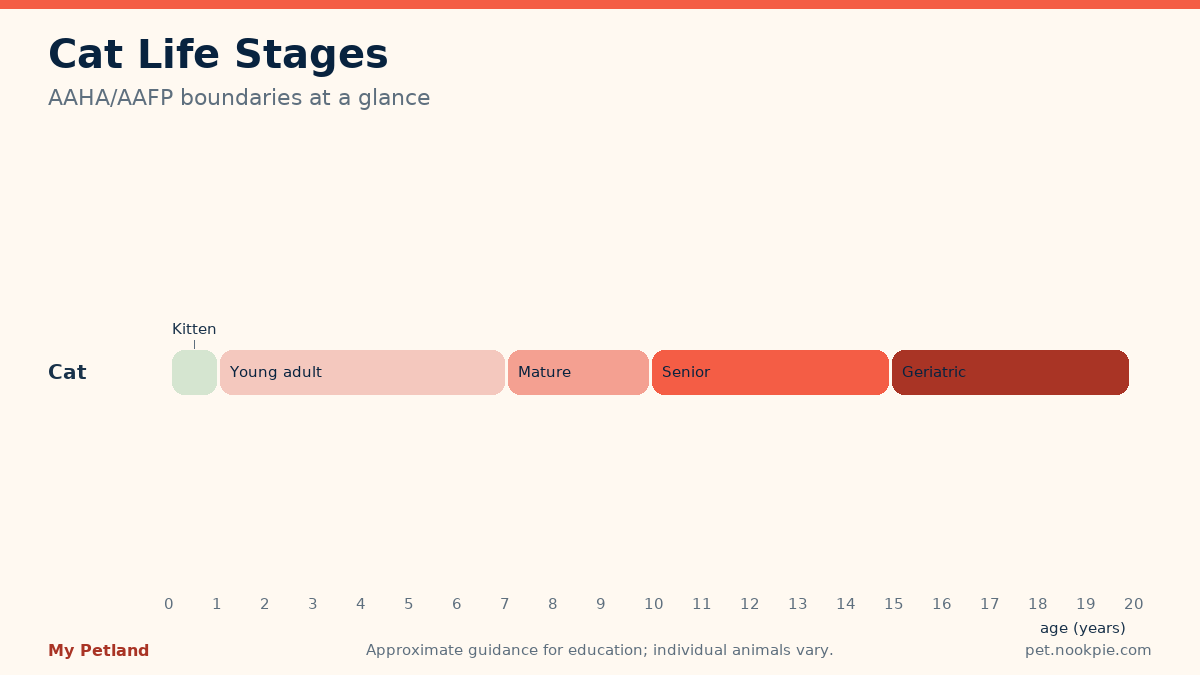
| Life stage | Approximate age |
|---|---|
| Kitten | birth to under 1 year |
| Young adult | 1–6 years |
| Mature adult | 7–10 years |
| Senior | over 10 years |
| Geriatric | 15 years and older |
These boundaries come from the joint AAHA/AAFP framework and focus attention on evolving physical, behavioral, and medical needs. They are starting points, not verdicts: a senior cat can remain playful and comfortable, and a younger cat can develop a change that needs prompt attention. The cat life stages overview explains the full framework, and the cat age chart shows the human-age comparison.
The mature-adult years are the quiet transition
The mature-adult stage, roughly seven to ten, is the feline equivalent of middle age — and the easiest stage to neglect. A mature cat usually looks and acts unchanged, yet this is when gradual shifts in weight, muscle condition, and organ function may begin beneath the surface.
Treating these years as a transition is more useful than waiting for the senior label. Establish a clear baseline of weight, appetite, water intake, litter-box habits, grooming, movement, and behavior, so later change stands out. The adult cat preventive care checklist covers what to track.
What actually changes in the senior years
Veterinary senior-care guidance emphasizes a few practical shifts once a cat passes ten:
- More frequent checkups. Veterinary visits every six months or so are commonly recommended for senior cats, because cats mask early signs of illness and conditions can progress quietly.
- Closer day-to-day observation. Weight, appetite, water intake, litter-box habits, grooming, jumping, and behavior deserve regular, calm attention. The senior cat daily care checklist provides a routine.
- Adjusted expectations, not lowered ones. Many senior and geriatric cats remain engaged and content. The stage invites earlier attention to change, not resignation to decline.
Signs that should not be written off as age
Cats rarely announce discomfort, so gradual change carries more weight than single dramatic signs. Slow weight loss, drinking more water, reduced jumping, a duller or less groomed coat, new hiding, altered sleep, or litter-box changes are all worth a veterinary conversation — none of them should be assumed to be “normal aging” without an examination.
Age explains time, not symptoms. If you notice a new or progressing sign at any age, our guide on signs your pet needs a vet explains which changes warrant routine, prompt, or emergency attention.
Not sure which stage your cat is in? The calculator shows the current life stage alongside the human-age comparison.
Common questions
Is a ten-year-old cat old? Ten is where the AAHA/AAFP senior stage begins, but it is a boundary for care, not a verdict. Many cats live well into their teens, and a ten-year-old cat can remain playful and comfortable for years.
My senior cat seems fine — are checkups still needed? Yes. Cats are skilled at masking early signs of illness, and conditions can progress quietly. Visits roughly every six months are commonly recommended for senior cats precisely because everything can look normal at home.
Is slowing down just normal aging? Not by default. Reduced jumping, weight change, altered thirst, a duller coat, or new hiding are findings worth describing to a veterinarian at any age — they should not be attributed to age without an examination.